Korean vs. Japanese Cars: Which is Best for the Saudi Market?
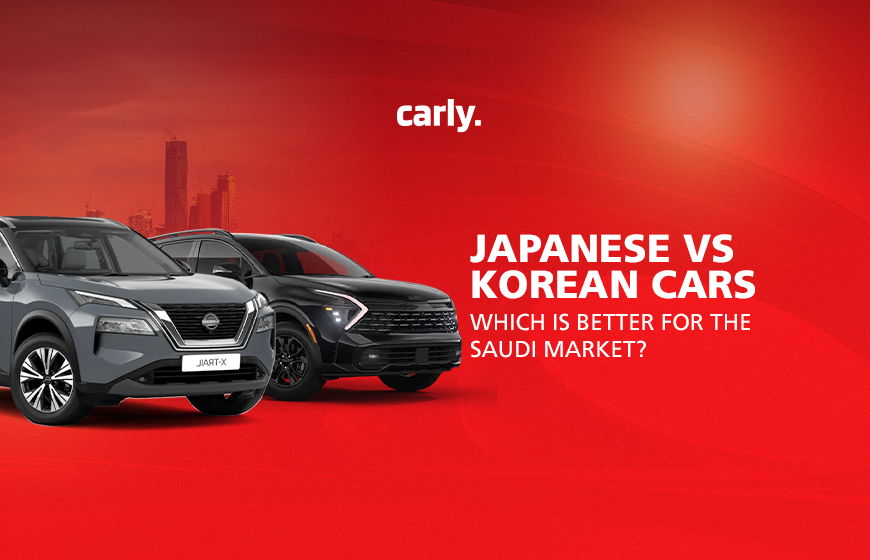
Both Japanese and Korean cars have led the Saudi car market scene for many years, as they together form the vast majority of new and used cars that roam the Kingdom’s roads. While Japanese car types offer a long legacy of reliability, endurance, and focus, Korean car types focus on keeping up with rapid technological development in design and value for price.
With the diversity of Saudi consumer needs, the important question arises:
Is it better to choose a Japanese car with guaranteed performance and long lifespan, or head toward a Korean car that combines rich features and competitive price?
This comprehensive analytical guide from Carly provides a detailed comparison between the two manufacturing schools, based on Saudi market experience and criteria such as climate, reliability, maintenance, and total ownership cost.
How Has the Historical Background of the Saudi Automotive Market Evolved, and What Stages Shaped Its Identity?
The Saudi Arabian automotive market has a rich history full of transformations. It evolved from a market focused on meeting basic transportation needs in a harsh desert environment into one of the largest and most powerful technology- and luxury-oriented markets in the Middle East. This identity was shaped through two primary historical phases:
Phase One: The Japanese Era and the Founding of the “Reliability” Concept
The real story of Saudi driving culture began in the 1970s with the entry of Japanese giants such as Toyota, Nissan, Honda, and Mazda. During that period, the Saudi consumer was searching for the ultimate vehicle — one that could conquer the desert and withstand temperatures exceeding 50°C without failure.
What Did Japan Bring to the Saudi Market?
- Rock-Solid Trust: Models such as the Land Cruiser and Hilux became true life partners for citizens, thanks to their durability and mechanical simplicity, which minimized complex electronic failures.
- Investment Security: The Japanese established a culture of the “blue-chip car” — vehicles that retain their high resale value, supported by an enormous availability of spare parts across every corner of the Kingdom, making maintenance affordable and accessible to all.
Phase Two: The Korean Surge — A Rapid Rise in Technology and Design
Korean vehicles entered the Saudi market in the 1990s, but gained widespread traction over the last two decades thanks to the significant industrial and technological advancement of companies such as Hyundai, Kia, and Genesis.
Factors Behind Korean Success:
- Continuous Evolution: Korean cars transformed from economy vehicles into direct competitors to Japanese and European cars in terms of luxury and quality.
- Value for Money: They offer high-end specifications at a lower price than their Japanese counterparts, making them an attractive choice for buyers seeking modern features.
- Extended Warranty: The majority of Korean manufacturers provide warranties of up to 5 years or more — a powerful reassurance factor for first-time buyers.
- Modern Appeal: Korean brands target young buyers and families who prefer bold design and advanced in-cabin technology.

Japanese Cars or Korean Cars — Which Do You Choose?
If you’re torn between Japanese reliability and Korean technological luxury, we’ve put together a comparison highlighting the 4 most important factors for the Saudi consumer before making a purchase.
| Comparison Factor | Japanese School (Toyota, Nissan, Honda…) | Korean School (Hyundai, Kia…) |
|---|---|---|
| Reliability & Longevity | Legendary — simple engines built to withstand harsh conditions. | Excellent, though future electrical system maintenance deserves attention. |
| Features & Luxury | Focuses on the essentials (luxury reserved for higher trims). | Superior — advanced screens and technology available from mid-range trims. |
| Resale Value | The clear winner — a solid check in your pocket. | Very strong and improving, but still slightly behind the Japanese. |
| Maintenance & Spare Parts | Available everywhere and at any workshop. | Cost-effective thanks to dealership networks and extended warranties. |
Comprehensive Comparison Between Korean and Japanese Cars
Reliability and Lifespan
Japanese:
- Distinguished by stable performance over the long term and few mechanical failures
- Cars like Corolla and Highlander are known to not “break down” easily even in harsh conditions
- Designed with simple, strong engines that don’t require complex maintenance
Korean:
- Quality has improved significantly during the past decade
- Cars like Kia Sportage, Hyundai Sonata, and Santa Fe have proven their reliability in hot climate
- However, some advanced electronic systems may need special care after warranty ends
Maintenance Costs and Spare Parts
Japanese car types:
- Widespread service centers in all cities and regions
- Large availability of spare parts at varying prices (original and commercial)
- Many workshops specialized in Toyota, Nissan, Honda, and Mazda, which reduces maintenance cost
Korean car types:
- Previously maintenance cost was higher, but dealership expansion and Korean car availability reduced costs
- Long warranty covers most major repairs during early years
- Some modern models need specialized workshops due to their complex electronic systems
Value for Price and Features
Superior Korean (in luxury):
- Offers advanced features in mid-range categories, like leather seats, cooling system, surround cameras, and large display screens
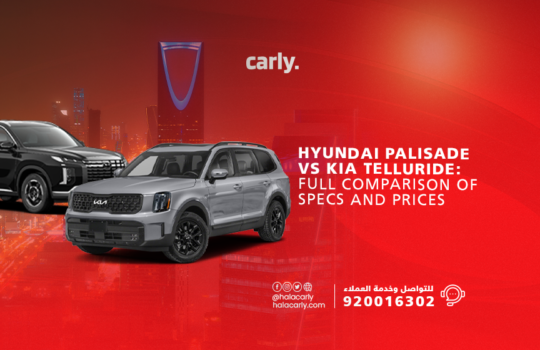
- Example: Kia Telluride, Hyundai Palisade, and Genesis offer features close to luxury cars at much lower prices
Superior Japanese (in stability):
- Focuses on mechanical performance and reliability more than cosmetic additions
- Usually, advanced features are exclusive to premium categories
Resale Value
Japanese (Winner):
- Toyota and Honda maintain high value at resale thanks to great trust from buyers
- The used car market in Saudi Arabia depends heavily on Japanese cars
Korean:
- Major improvement in remaining value during recent years thanks to manufacturing quality and demand rise, but they’re still less than Japanese in some models
ابحث عن سيارة أحلامك الآن!
استكشف آلاف السيارات الجديدة والمستعملة بأفضل الأسعار. تصفح، قارن، واشتري بكل سهولة من خلال منصة كارلي الموثوقة.

Comparing the Main Japanese and Korean Segments in the Saudi Market
We cannot talk about competition in general without putting the most prominent models in a direct, head-to-head face-off. In the following lines, we dissect the Saudi market and classify it into 3 main categories (economy sedans, compact crossovers, and large family SUVs) to provide you with a comprehensive guide that highlights the strengths and weaknesses of each model, and demonstrates how the Japanese automaker differs from its Korean counterpart in each segment.
Economical Sedan Category
Japanese Model | Korean Model | Main Feature |
|---|---|---|
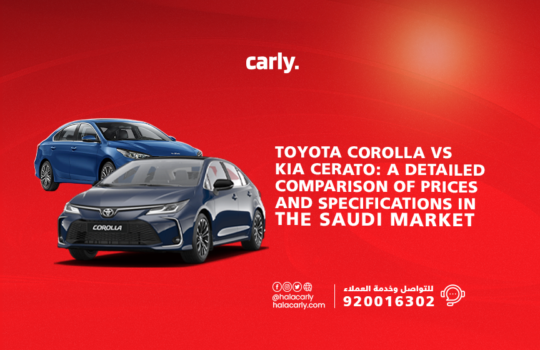
Hyundai Elantra | Corolla excels in reliability, while Elantra offers modern design and advanced technology | |
Honda Civic | Kia Cerato (Forte) | Civic offers balanced driving experience, while Cerato offers modern features at lower price |
Result: Japanese suitable for those seeking reliability, while Korean appeals to those seeking modern shape, competitive price
Compact Crossover Category
Japanese Model | Korean Model | Main Feature |
|---|---|---|
Toyota RAV4 | Hyundai Tucson | RAV4 distinguished by hybrid system and fuel economy, while Tucson is more luxurious |
Nissan X-Trail | X-Trail has stable performance, Sportage is attractive in shape and features |
Result: Korean cars excel in interior design and features, while Japanese are best in reliability and long lifespan
Large SUV Segment
| Japanese Model | Korean Model | Key Feature and Comparison |
| Toyota Land Cruiser | Kia Palisade | The Land Cruiser reigns supreme in power, heavy-duty durability, and conquering desert terrains, while the Palisade provides smart family spaces with advanced entertainment technology at an economical purchase price. |
| Lexus LX | Genesis GV80 | The Lexus LX represents classic luxury associated with prestige and high resale value, while the Genesis GV80 offers a revolution in modern luxury, quietness, and futuristic design at nearly half the price. |
Ideal choice:
- Those seeking endurance and value at resale, Japanese is better
- Those seeking luxury and high technologies at mid-price, Korean is a smart choice

What is the impact of the Saudi climate and environment on Japanese and Korean cars?
Air Conditioning with High Heat
Japanese:
- Very strong air conditioning systems in cars like Land Cruiser and Highlander have proven their efficiency in hot weather
- Interior materials resistant to heat and long lifespan
Korean:
- Developed noticeably in recent years
- Offers features like ventilated and cooled seats that add comfort in summer weather
Financing and Warranty
Korean:
- Longer warranty (up to 5 years or more), which gives buyer safety during the financing period
- Important advantage when purchasing through financing platform like Carly
Japanese:
- Although warranty is shorter usually, market trust in their value makes financing easier or sometimes with better terms
How to Choose Between Korean and Japanese Cars?
Priority | Best Choice | Reason |
|---|---|---|
Reliability and endurance | Japanese | Stable performance and long history of durability in Saudi climate |
Value for price | Korean | Features and modern technologies at competitive price |
Resale | Japanese | High value retention in used market |
Design and technology | Korean | Modern appearance and advanced features in mid-range categories |
Ultimately, there’s no “one” ideal choice that suits everyone.
Japanese cars are the ideal choice for those seeking peace of mind, safe long-term investment, while Korean cars offer a modern driving experience rich with technical features at lower price.
When making your decision, think about your daily use, your budget, and your preference between reliability or luxury.
And if you’re looking for the best financing offers for both categories, you can now, through Carly, compare offers, choose the appropriate car, and get financing that suits your needs, whether you choose Japanese or Korean.