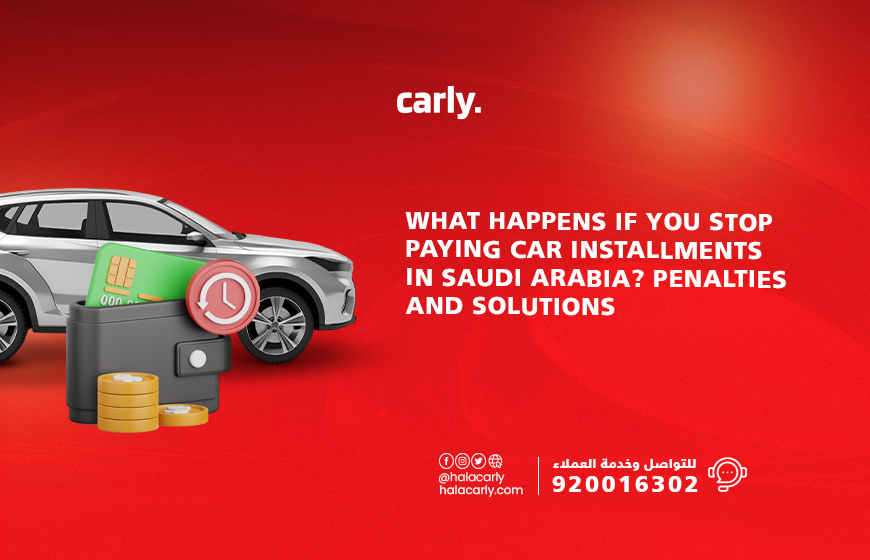
Many citizens and residents in Saudi Arabia purchase cars on installments as it is one of the best solutions for acquiring a high-quality vehicle for daily life needs. But what if you stop paying car installments due to financial inability or the situation develops into financial default — will the car be repossessed, will government services be suspended, or could it even lead to imprisonment? This is what we will find out in this article. Carly provides a practical and realistic guide to what happens when you stop paying installments, from the first missed payment all the way to advanced legal stages, along with solutions that help customers avoid losses and make the right decision.
Escalating Stages of Stopping Car Installment Payments
Falling behind on car installments does not happen suddenly; rather, it goes through a series of stages that give the customer more than one opportunity to address the situation before it turns into a legal problem. Understanding these stages helps in making the right decision and avoiding entering a period of financial default that could affect the financial future for several years.
- The first stage of the problem is simple delay. If only one installment is missed, the financing entity begins taking simple steps aimed solely at reminding the customer rather than escalating. At this stage, a text message or notifications are sent through the bank app, the customer service team calls to remind the customer of the payment due date, and the customer is also notified of the amount due and the due date. In some cases, late fees are imposed according to what was stipulated in the financing contract. At this stage, there is no registration as a defaulter as a financial defaulter, no legal action is taken, and the credit record is not significantly affected, especially if payment is made quickly.
ابحث عن سيارة أحلامك الآن!
آلاف السيارات الجديدة والمستعملة بأفضل الأسعار. تصفح، قارن، واشتري بكل سهولة من خلال منصة كارلي الموثوقة.
- The problem begins to escalate if the installment is not paid within a short period. At this point, more intensive measures are taken to assess the situation as a customer at risk of default, the frequency of bank contact increases as reminders, the account is placed on the internal follow-up list, and some entities begin to classify you as a credit risk after a delay exceeding 30 days.
- The next stage is actual default on car installments. Here the situation moves to a more serious level and the non-paying customer is classified as a defaulter This typically occurs when payment is delayed for more than 30 consecutive days, or when three consecutive installments or five scattered installments within a specified period are unpaid. In this case, when you are classified as a defaulter , the financing entity notifies SIMAH, the official body responsible for collecting and analyzing the credit behavior of individuals in Saudi Arabia. SIMAH is an entity that fully affects your financial future: your credit score is lowered, a delay record appears in credit reports, and you are classified as a high-risk customer. In this case, your financial life is affected as you face difficulty obtaining new financing, credit limits may be rejected or reduced, and financing cost rates increase.
- In the third stage, if the customer does not respond, the file is escalated within the financing entity where the customer is considered an uncooperative case. The preparation phase for legal procedures begins here, which includes gathering documents, reviewing the contract, and fully preparing the legal file. Formal notices are also directed to the customer, and these notices may be delivered through documented channels such as the national address. This step means the problem is no longer a mere delay but is now on the verge of entering the judicial path.
- If no solutions are reached, the case is transferred to the competent judicial authorities, and the financing entity submits documents proving the existence of the debt and the customer’s obligation to it, such as the payment record and the financing contract.
- After the judicial authority reviews the application, an order may be issued requiring the customer to pay the amounts due. The customer is formally notified of this decision and a period called a grace period is set for payment or settlement. This is considered an advanced stage, yet it still provides the customer with an opportunity to negotiate or pay before enforcement procedures are applied, making it a critical turning point to rectify the situation.
- If there is non-compliance after this ruling is issued, the competent authorities begin applying enforcement procedures gradually. These procedures include suspending some government services, imposing a travel ban, freezing bank accounts, and the possibility of deducting a portion of income.
- Seizure of the car or property: if the default continues despite enforcement procedures, the process moves to seizing assets, primarily the financed car. The car is legally repossessed and then offered for sale at auction, with the proceeds used to cover the debt. If the sale value is insufficient to pay the full amount due, the customer remains obligated to pay the difference, meaning the problem does not end with the car being repossessed.
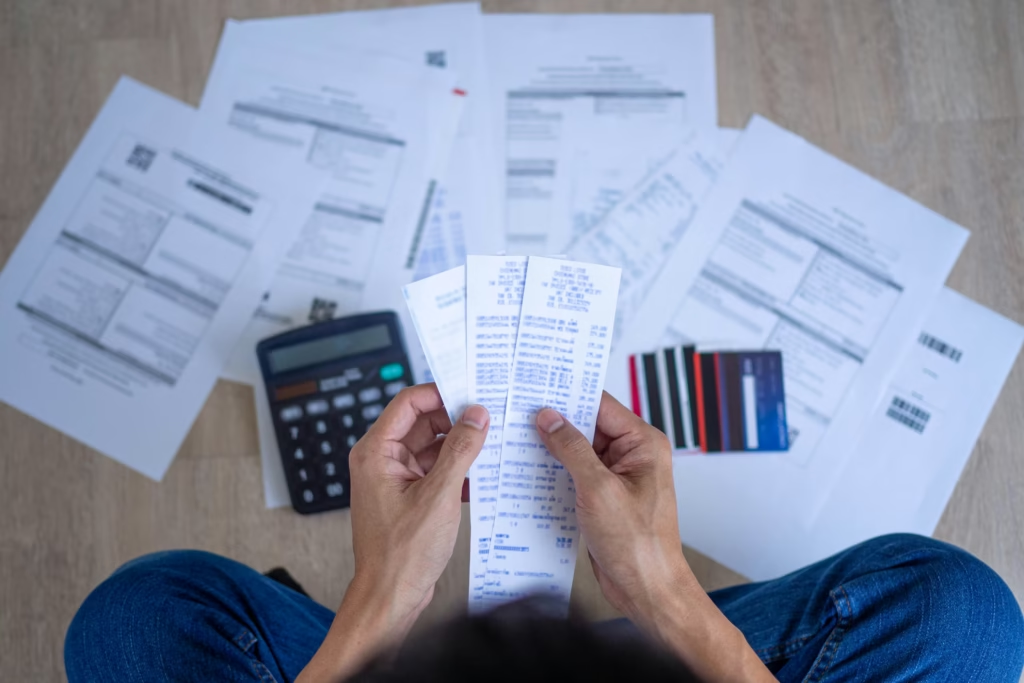
How Does the Problem Evolve Over Time When Car Installments Are Not Paid?
For a clearer picture, here is an approximate timeline of the stages that default goes through:
| Stage | Approximate Duration | What Happens? |
| First Delay | 1 to 30 days | Reminder messages and bank calls with no legal action |
| Start of Escalation | After 30 days | Increased follow-up and classification as a customer at risk of default |
| Actual Default | 60 to 90 days | Registration in “SIMAH” and credit score decline |
| Intensive Collection | After 3 months | File transferred to collections and solutions such as rescheduling offered |
| Start of Legal Proceedings | After several months | File preparation and case filing |
| Enforcement Ruling Issued | Later | You are required to pay and given a final grace period |
| Enforcement Procedures | After the ruling | Service suspension – travel ban – account freeze |
| Car Repossession | Final Stage | Car seizure and sale at auction |
What Should I Do to Avoid Penalties When Defaulting on Car Installments?
Avoiding penalties does not rely on a single solution; it depends on acting quickly and managing the crisis well that you are going through. The earlier you deal with the problem, the greater your chances of reaching a simple solution, protecting your credit record, and avoiding complex legal stages.
Contact the Financing Entity Early
Dealing quickly with the problem is the most important step to avoid escalation at the first delay. Do not ignore messages or calls; instead, proactively contact the bank or financing company and clearly explain your financial situation. This action gives you a greater chance of obtaining flexible solutions, demonstrates your good faith, and reduces the likelihood of being classified as an uncooperative customer.
Loan Rescheduling
If the monthly installment has become more than your current financial capacity, loan rescheduling is considered one of the best available solutions. In this case, the repayment terms are adjusted so that the installment amount is reduced or the financing period is extended, helping you continue paying without significant financial pressure, especially in cases of reduced income or increased obligations..
Requesting a Grace Period or Temporary Deferral
If the default is the result of an emergency circumstance such as a delayed salary or a temporary financial problem, you can request a short grace period or installment deferral. Submitting this request early may prevent installment accumulation and spare you from entering the actual default stage, so it is important not to wait until the problem worsens.
Reaching an Amicable Settlement
If installments start to accumulate, do not wait until they turn into a case. You can negotiate with the financing entity to reach an appropriate settlement, such as paying part of the amount or agreeing on a new repayment plan. This may be a faster and less costly option than legal proceedings, and it gives you the opportunity to control the situation before it escalates..
Selling the Car Before Reaching Seizure
In some cases, the smarter solution is to sell the car rather than continuing with obligations you cannot afford. Early sale helps you get a better price than the auction price and allows you to pay off the loan or significantly reduce it. You can benefit from platforms such as Carly that facilitate selling the car quickly and safely, which reduces losses and gives you greater flexibility in decision-making.
Carefully Reviewing the Financing Contract
It is important to refer to the financing contract to understand all conditions related to default, such as fees, penalties, and procedures followed. Knowing the contract details helps you make correct decisions and avoid surprises, especially since the type of financing can significantly affect the procedures that may be taken later.

Types of Car Financing and Carly’s Role in Reducing Losses
One of the points that many overlook when defaulting on car installments is that the type of financing itself plays a fundamental role in determining the best decision to take. In the case of lease-to-own financing, the car remains owned by the financing entity, which means repossessing it may be easier if the default continues.
In the case of a personal loan, the car is in your name, which gives you greater flexibility in dealing with it.
Here, an option that may be the appropriate solution in some cases emerges: selling the car before reaching seizure or repossession stages, as mentioned in the previous paragraph. Instead of waiting for legal procedures and the additional losses that may accompany them, you can use the time to sell the car at a reasonable price that helps you repay the loan or significantly reduce it.
Through the Carly website or app, the selling process becomes easier and faster, as you can reach a large number of buyers and obtain a fair price that reflects the true value of the car. This option not only helps avoid legal complications but also gives you the opportunity to exit the financial crisis with the least possible losses.
Frequently Asked Questions
Is the Car Repossessed Immediately Upon Late Payment?
The car is not repossessed immediately upon missing installment payments; rather, several stages are gone through starting with notifications and follow-up.
When Does a Delay Turn Into Financial Default?
A delay is considered a default when it continues for a certain period or recurs more than once.
What Is the Effect of Non-Payment on the Credit Record?
Late payment or default is directly reflected on the credit record, as it is registered with the relevant authorities, which may reduce the chances of obtaining financing or financial facilities in the future.
Can Services Be Suspended Due to Car Installments?
Service suspension does not occur merely upon delay, but it may happen in advanced stages after a judicial ruling is issued and non-compliance with payment continues.
Does Non-Payment of Installments Lead to Imprisonment?
In principle, debts do not lead to imprisonment directly, but in some cases legal measures such as enforcement imprisonment may be taken if the ruling is not complied with despite the ability to pay.
Does the Type of Financing Affect the Procedures?
Yes, handling of default differs according to the type of financing, and this may affect the procedures taken later.
When Is Selling the Car a Suitable Decision?
Selling the car is a suitable decision when the installment becomes a burden that is difficult to bear, as early sale helps reduce losses and avoid reaching complex legal stages.
In conclusion, stopping car installment payments in Saudi Arabia is not merely a passing delay but the beginning of a path that can gradually escalate if not handled correctly. Therefore, making the right decision at the right time remains the most important factor in avoiding complications and maintaining your financial stability.