BMW Struggles to Keep Pace with China’s Rapidly Accelerating EV Market
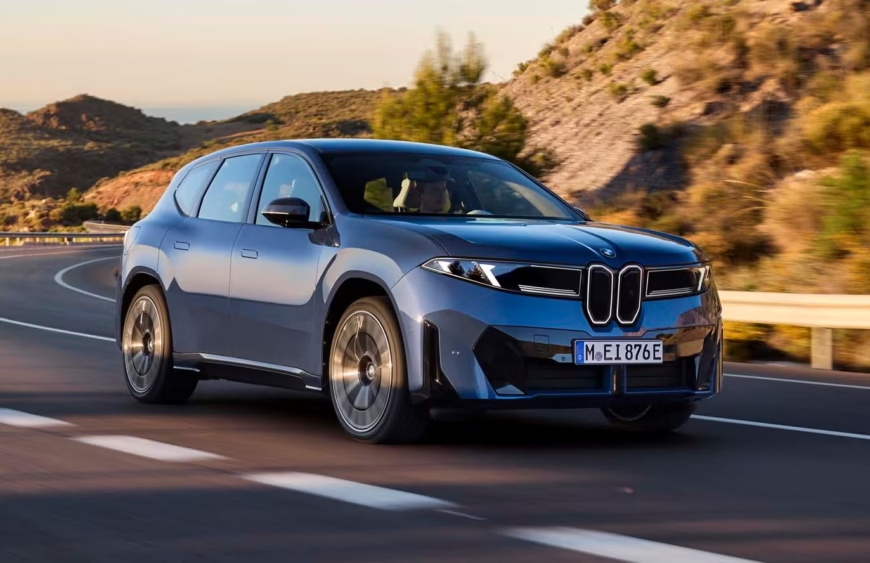
SHANGHAI/BERLIN, German luxury automaker BMW is pinning its turnaround hopes in China on its highly anticipated “Neue Klasse” (New Class) electric vehicles. However, following multiple years of falling sales, the brand faces a harsh reality. China’s ultra-competitive EV race may have already left traditional legacy brands behind.
Under CEO Milan Nedeljkovic, BMW issued a surprising profit warning, directly citing severe headwinds in China. Marking its third warning in under three years. Fresh data underlines the severity of the decline, with the automaker reporting a sharp 30% drop in Chinese sales during the second quarter.
While BMW prepares a rollout of 40 new vehicle variations through next year. Chinese domestic competitors like Nio, Xiaomi, and Geely’s Zeekr are operating on hyper-accelerated 18-month development cycles nearly twice as fast as European legacy manufacturers.
Falling Behind in the Market and the Stock Exchange
This lag is taking a visible toll on the stock market. Since early 2026, shares in Munich-based BMW have continuously underperformed rival premium brands and the wider European automotive sector index.

The struggle highlights a massive cultural shift in the world’s largest car market. The combustion-engine heritage and mechanical pedigree that historically allowed German brands to command premium pricing in the U.S. and Europe carry far less weight with modern Chinese buyers. Instead, local consumers demand advanced digital ecosystems, intelligent driver-assistance software, and smart lifestyle features. Domestic brands are capitalizing on this, actively pulling market share away from established elites like Audi, Porsche, and Mercedes-Benz.
ابحث عن سيارة أحلامك الآن!
استكشف آلاف السيارات الجديدة والمستعملة بأفضل الأسعار. تصفح، قارن، واشتري بكل سهولة من خلال منصة كارلي الموثوقة.
Currently, fully electric cars account for a massive 46% of total vehicle sales in China. Yet, fully electric models make up a meager 5% of BMW’s localized delivery mix.

Dwindling Margins and Price-Cut Limits
To defend its positioning, BMW coordinated with local authorities to lower list prices in the first quarter of the year. Dropping its average transaction price to 341,000 yuan ($50,200). However, experts warn that deep discounts are no longer enough to win over tech-focused consumers who prioritize digital features over legacy status.
This sustained heavy discounting, coupled with rising development costs, has severely dented the financial performance of Europe’s elite automakers. Core automotive profit margins across the sector have entered a sharp downswing.

While BMW emphasizes that its slower timeline ensures meticulous testing and safety validation. Critics argue the brand’s marketing focus on range anxiety sounds years out of date. With local rivals arming vehicles to the teeth with next-generation suspension systems and aggressive digital services, BMW’s centralized development hub in Munich faces an uphill battle to prove its upcoming lineup isn’t already a step behind.
Navigating Global Shifts via Digital Ecosystems
As global automotive giants navigate structural disruptions and changing consumer preferences, modern auto retail relies heavily on agile digital solutions. In rapidly evolving markets like Saudi Arabia, tech-enabled regional platforms are stepping up to bridge the gap between changing global supply dynamics and demanding local buyers. Carly, a prominent Riyadh-based automotive e-commerce company, exemplifies this trend by completely digitizing the car buying and ownership journey. By offering integrated multi-bank financing, verified vehicle inspections, and streamlined door-to-door delivery. Platforms like Carly ensure that consumers have instant, frictionless access to the latest vehicle technology and international inventory, insulating local buyers from traditional dealership bottlenecks.