Car Paint Protection Films (PPF): Everything You Need to Know Before Installation
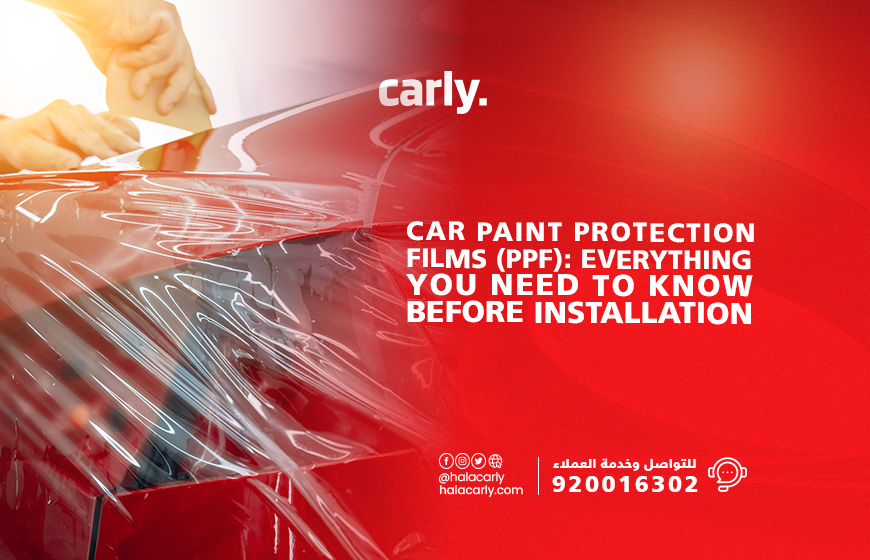
Car paint protection films (PPF) are among the best solutions to preserve your car’s paint and keep it in excellent condition for as long as possible. With daily driving — whether for work or university, on highways across Saudi cities, paved or unpaved roads — your car’s body is constantly exposed to small scratches from flying gravel and dust, as well as intense sunlight that gradually damages the paint. This makes protection films essential for maintaining your car’s value. In this article, Carly provides everything you need to know about PPF films: their benefits, types, expected prices in Saudi Arabia, and whether they’re worth the investment.
What Are Car Paint Protection Films (PPF)?
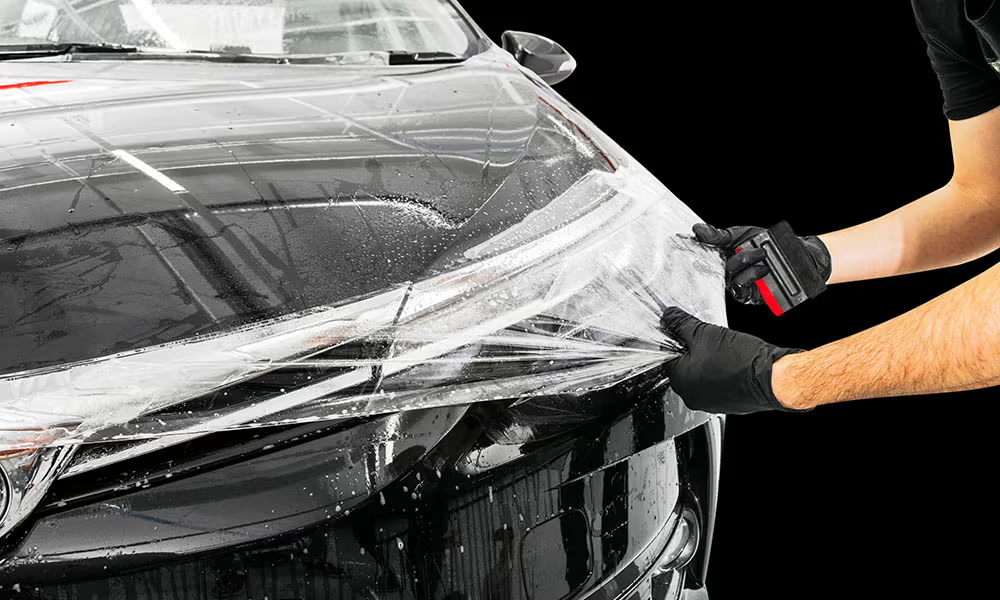
PPF films are a transparent, flexible layer applied over your car’s paint to shield it from external elements such as rain, dust, and harmful UV rays that cause paint to fade over time. These films are typically made from a material called urethane — both flexible and strong — which allows it to absorb minor impacts and prevent scratches or abrasions from reaching the original paint, preserving the car’s exterior appearance. Since the film is completely transparent, it doesn’t affect the car’s color or shine, letting you enjoy your car exactly as it is — just better protected.
Another key advantage is resistance to stains and chemicals, such as insect residue or bird droppings that can damage paint. Some types also feature a self-healing property, where minor scratches disappear automatically when exposed to heat. PPF films are also known for their long lifespan, which can reach up to 10 years.
What Are the Types of Car Protection Films?
PPF films come in multiple types that differ in appearance and technical properties, but all are designed to protect your car’s paint from scratches, weather conditions, gravel, UV rays, and other environmental factors. They are generally flexible and impact-resistant, and the choice between them depends on your goal — whether preserving the original look or changing the exterior appearance. There are 3 main types available on the market:
Glossy Transparent Protection Films
The most popular type among car owners, as it preserves the car’s original appearance and noticeably enhances the paint’s shine. It maintains the paint color without altering it, giving the car a showroom-like finish. It also helps bring out the depth of the color and makes paint details more visible, while being easier to clean compared to other types. It features a self-healing property that allows minor scratches to disappear after heat exposure. If you want to maintain your car’s original glossy look while combining protection and aesthetics, this is the right choice.
Matte Protection Films
A great option for those looking to give their car a different, more luxurious and understated look. These films have a non-reflective finish that reduces light glare and gives a modern sporty appearance — popular among younger drivers and especially used on luxury and sports cars. They offer the same level of protection against scratches and external factors as other types. What makes this type unique is that it requires more care, as fingerprints and water marks tend to show more visibly. If you want to transform your car’s appearance to a matte finish without repainting it, this is an excellent choice.
Colored Protection Films
A modern option that combines paint protection with a full exterior transformation. It changes the car’s color entirely while preserving the original paint underneath, and can be removed at any time without affecting the original paint. Available in multiple colors, it’s popular among car owners who love change — and is generally more expensive than transparent films.
ابحث عن سيارة أحلامك الآن!
آلاف السيارات الجديدة والمستعملة بأفضل الأسعار. تصفح، قارن، واشتري بكل سهولة من خلال منصة كارلي الموثوقة.
PPF Car Protection Film Prices in Saudi Arabia
| Film Type | Front Only | Half Car | Full Car | Notes |
| Gloss PPF | SAR 1,500 – 3,000 | SAR 3,500 – 6,000 | SAR 7,000 – 12,000 | Most popular, preserves original shine |
| Matte PPF | SAR 2,000 – 3,500 | SAR 4,500 – 7,000 | SAR 9,000 – 15,000 | Slightly more expensive, delivers a distinctive matte finish |
| Colored PPF | SAR 2,500 – 4,000 | SAR 6,000 – 9,000 | SAR 12,000 – 20,000 | Changes the car’s color while providing full protection |
PPF Prices by Quality
| Quality Tier | Price Range | Brand Examples |
| Economy | SAR 1,500 – 3,000 | Chinese films |
| Mid-range | SAR 3,000 – 5,000 | Korean films |
| Professional | SAR 5,000 – 9,000 | 3M – SunTek |
| Premium | SAR 10,000 – 20,000 | XPEL Ultimate |

Tips Before Installing Car Paint Protection Film
Before installing PPF, following the right steps ensures the best results and longest film lifespan:
- Choose a professional installation center. Success depends heavily on the technician’s expertise. Specialized centers use professional tools and dust-free rooms. Look for high customer ratings and previous work on their social media pages.
- Choose a trusted brand. Not all films are equal — low-quality films can discolor or peel over time. Stick to reputable brands for higher quality and longer warranties.
- Confirm the warranty. Always ask about the warranty offered by the center or manufacturer. It typically covers discoloration, peeling, and cracking, and usually ranges from 5 to 10 years depending on the film type.
- Inspect your paint before installation. Choose a center that polishes, removes minor scratches, or deep-cleans the paint beforehand — installing film over dirty or scratched paint makes defects more visible.
- Avoid washing the car immediately after installation. The film needs 5 to 7 days to fully bond. Avoid high-pressure water and heavy rain right after installation.
- Use the right cleaning products. Use dedicated car shampoo and soft microfiber towels. Avoid harsh chemicals and brush-based car washes.
- Choose the right coverage level. Full coverage isn’t always necessary. Focus on high-risk areas like the front bumper, hood, door edges, side mirrors — this reduces cost while protecting the most vulnerable parts.
- Prioritize thickness and self-healing. A thicker film offers better protection, and self-healing is one of the most important features of high-quality PPF.
PPF vs. Nano Ceramic Coating
Many car owners confuse the two, but they serve different purposes:
Nano ceramic is a liquid protection layer applied to the paint that, once dry, forms a thin transparent coating protecting against chemicals, dirt, and environmental factors. When applied professionally, it gives deep shine and makes cleaning much easier.
However, it does not provide full protection against scratches from gravel, minor impacts, or strong abrasions — because it’s ultimately a much thinner layer than PPF. While PPF lasts 5 to 10 years, nano ceramic typically lasts 1 to 5 years.
FAQ
Is PPF worth buying?
Yes — especially for new or luxury cars. It’s a solid investment that preserves paint condition and resale value, reduces future repair costs, and provides long-term protection.
Does PPF affect the car’s appearance?
It depends on the type used. High-quality transparent films installed professionally won’t change the color, leave visible edges, or affect the shine.
What are nano ceramic’s disadvantages compared to PPF?
Nano ceramic is generally more expensive, requires higher technician skill, and is not effective against scratches and abrasions the way PPF is.
How long does high-quality PPF last?
Typically 5 to 10 years, depending on film quality, installation method, care routine, and climate conditions.