Ceer graduates its first cohort of engineers under the “Waed” track: what does this mean for Saudi Arabia’s car market?
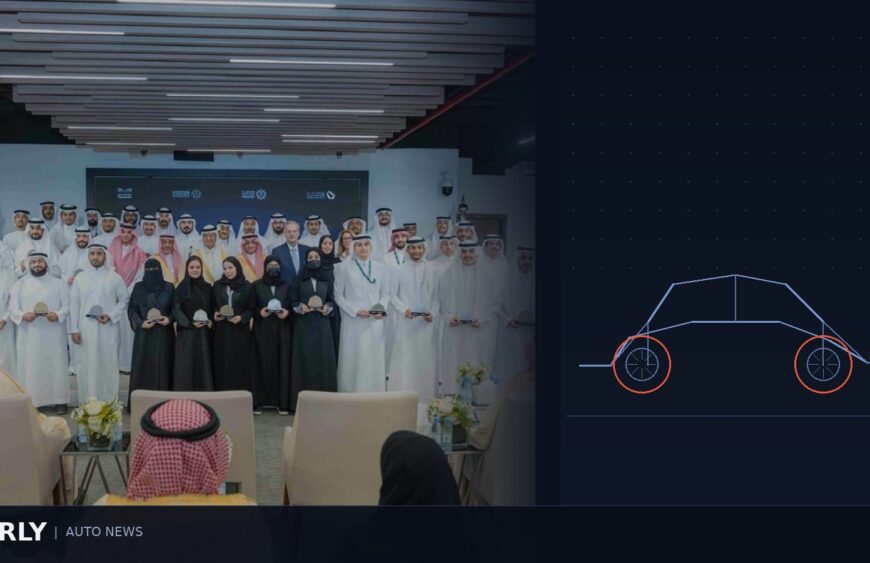
Ceer, the National Automobile Company and Saudi Arabia’s first dedicated electric vehicle brand, celebrated the graduation of its first cohort of Saudi engineers sponsored under the “Waed” track of the Custodian of the Two Holy Mosques’ Scholarship Program. The milestone extends well beyond the graduates themselves — it signals an early shift toward a more mature, self-reliant Saudi car market, whether you’re browsing the cheapest cars available right now or weighing your car financing options. At Carly, we track every shift in the sector’s structure closely, given its direct impact on the quality and trustworthiness of the market we operate in.
Who is Ceer, and what does it mean for consumers?
Ceer is Saudi Arabia’s first company and brand dedicated to manufacturing electric vehicles, and it sits within a broader push to build an integrated national automotive sector spanning manufacturing, distribution, and related services. A genuine domestic manufacturer matters in practical terms: supply chains, spare parts, and service centers tend to become more accessible and closer to home over time — something that directly affects anyone considering buying or selling a car locally, new or used.
The “Waed” track: from scholarship to permanent employment
“Waed” is one of the specialized tracks under the Custodian of the Two Holy Mosques’ Scholarship Program, designed to directly align education outcomes with real labor-market needs. The story began last year, when Ceer hired 40 Saudi engineers from the national talent pool and enrolled them in a full one-year academic program: six months of academic study at Kettering University in Michigan, USA, followed by six months of hands-on training with some of the world’s leading vehicle and component manufacturers.
As a result, these 40 engineers are moving directly into permanent roles within Ceer, carrying hands-on experience gained at major global industrial facilities — not just a theoretical academic credential.
Inside the graduation ceremony: sponsorship and official attendance
The ceremony was held at the headquarters of the Ministry of Industry and Mineral Resources, under the patronage of Prince Abdulaziz bin Salman bin Abdulaziz Al Saud, and attended by Minister of Education Yousef bin Abdullah Al-Benyan, alongside a number of government officials and representatives from participating companies. The event honored 69 graduates who completed employment-linked scholarship programs, including 40 engineers from Ceer.
The ceremony also highlighted the pivotal role the Ministry of Industry and Mineral Resources plays in fostering an environment that supports innovation and growth in the automotive manufacturing sector, and recognized Ceer’s role as a national partner in delivering specialized programs that qualify national talent in promising industrial and technical fields. In his remarks, Ceer CEO James DeLuca described the graduates as the next generation of national talent poised to lead Saudi Arabia’s automotive landscape, noting their direct transition into the company’s workforce to help build the Kingdom’s first Saudi electric vehicle brand.
The Ceer–JVIS cooperation agreement
The ceremony also featured the signing of a cooperation agreement between Ceer and JVIS, aimed at strengthening the recruitment and development of national talent, building on an existing partnership between the two organizations. The agreement is expected to support growth in the automotive manufacturing sector and boost local content — which, over the medium and long term, translates into reduced reliance on imports, a factor that has historically influenced cost and availability in any maturing automotive market.
Localizing the auto industry: strategic dimensions beyond hiring
The impact of this program isn’t limited to employing 40 engineers. It’s an extension of a strategic partnership between the Ministry of Industry and Mineral Resources, the Ministry of Education, and the private sector, aimed at preparing qualified national talent to keep pace with industrial transformation and achieve the goals of Vision 2030, which at its core seeks to build a competitive national industrial sector that reduces reliance on imported expertise and products.
The expected impact on the used-car market
This is the question most directly relevant to consumers. As the base of local factories and domestic talent expands across the Kingdom, the volume of vehicles available in the market — both new and used — tends to grow, intensifying competition. That typically works in the buyer’s favor, in terms of both variety and pricing. Localizing the industry also tends to come with clearer quality and maintenance standards, along with closer oversight from the Ministry of Commerce on consumer rights and product warranties — a trend that makes buying a used car a safer experience over time, provided the vehicle has undergone a thorough inspection, is financed under clear terms, and is properly insured.
Economical and premium family cars available now on Carly
Against this backdrop of market expansion, Carly currently offers a range of vehicles rigorously inspected under a 150-point standard, backed by a 12-month warranty — covering both family and premium segments to suit a wide range of needs:
| Car category | Ideal use | Key features | Seating capacity |
| Full-size SUV | Long trips, travel, off-road and adventure driving | Spacious storage, advanced four-wheel drive systems, central climate control, rear entertainment screens | 7–8 seats |
| Mid-size crossover | Daily city driving and mid-length family trips | Excellent fuel efficiency, smart safety systems (radar and cameras), easy handling and maneuverability | 5–7 seats |
| Luxury sedan | Business professionals, formal commutes, and comfort-focused drivers | Leather seats with cooling and massage functions, advanced sound insulation, semi-autonomous driving systems | 5 seats |
| Compact economy sedan | Employees, students, and frequent daily commuters | Exceptional fuel efficiency, low maintenance costs, smart connectivity systems (Apple CarPlay) | 5 seats |
Every vehicle in this range has undergone comprehensive inspection standards before being listed for sale, with suitable financing options available directly from each vehicle’s page.
Quick comparison: electric vs. traditional cars in the Saudi market
With Ceer and other domestic manufacturers entering the market, a recurring question is whether an electric vehicle makes more sense than a traditional gasoline-powered one. The table below outlines the key differences today:
| Criterion | Electric vehicle | Traditional gasoline vehicle |
| Routine maintenance cost | Generally lower (fewer moving parts) | Moderate, depending on brand |
| Service center availability | Currently limited, expanding steadily | Widely available |
| Resale value | Still forming in the local market | Well-established and relatively stable |
| Charging/fueling infrastructure | Under active development | Fully established |
Given this, a thoroughly inspected traditional vehicle from Carly remains the safer choice for buyers who prefer to avoid uncertainty — especially with lower financing rates currently available.
Frequently asked questions
1. What exactly is the “Waed” track?
It’s a track under the Custodian of the Two Holy Mosques’ Scholarship Program, focused on sending Saudi industrial-sector talent for advanced academic and practical training, aimed at preparing them for permanent roles in promising industrial fields such as automotive manufacturing.
2. Why is Ceer particularly focused on localizing talent?
As Saudi Arabia’s first electric vehicle brand, the company is working to build an integrated national automotive sector — which requires local talent capable of managing manufacturing and development over the long term, rather than relying entirely on imported expertise.
3. Does the JVIS partnership mean Ceer vehicles will become cheaper?
The partnership focuses on attracting and developing national talent and boosting local content, which contributes to lower production costs over the long run — though the effect on pricing will take time to materialize in the market.
4. Are used Ceer vehicles available on Carly?
The secondary market for Ceer vehicles is still in its early stages given the company’s relative youth, but Carly closely tracks the entry of any new brand into the used-car market to add it to its inspected inventory as it becomes available.
5. What’s the difference between a car inspected at a certified center like Saudi Fahas and one listed on Carly?
A certified inspection center provides a report on the vehicle’s condition at the time of inspection. Carly adds to that a 12-month warranty and a 7-day return policy — extended protection after the purchase, not just an assessment before it.
6. Does localizing the auto industry affect insurance prices?
Not directly or immediately, but a growing number of certified local service centers reduces repair costs, a factor that insurance providers factor into policy pricing over the medium term.
7. When will the impact of programs like “Waed” reach the average consumer?
These programs typically take 3 to 5 years to translate into a tangible change in availability and pricing, since building an integrated industrial sector is a cumulative process, not an overnight shift.