Car Tires Buying Guide: Key Tips and Specifications You Should Never Ignore
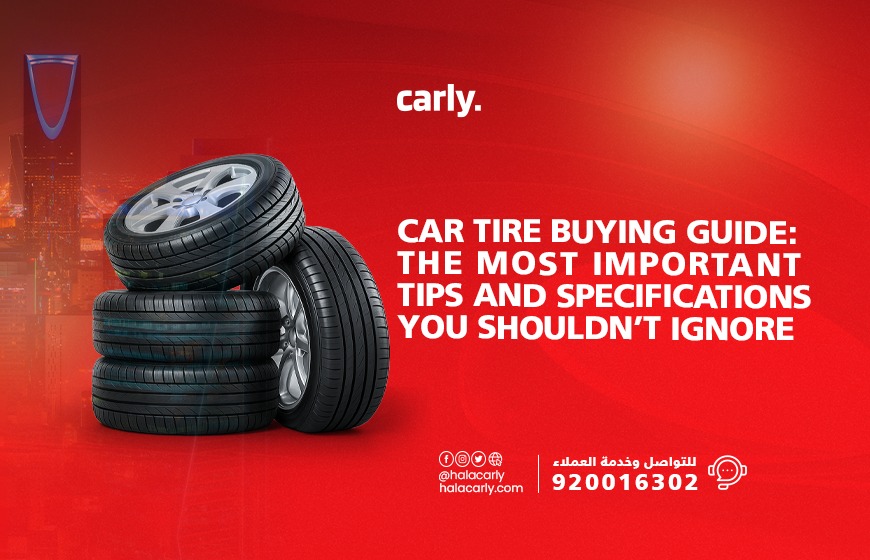
Car tires are among the most important safety components. They are your first line of defense between you and the roads in the Kingdom of Saudi Arabia. When discussing vehicle safety, many people immediately think of airbags, brakes, lighting systems, and other well-known safety features. However, in reality, tires are one of the most critical parts affecting vehicle stability, braking performance, fuel consumption, and even the car’s resale value.
In Saudi Arabia specifically, driving conditions differ from many other countries. Temperatures are high for most of the year, there are numerous unpaved roads, highways, and long commuting distances within crowded cities. Therefore, choosing the right car tires is not a luxury—it is a necessity. In this article, Carly, a platform for buying and selling cars, discusses in detail the types of car tires, how to choose them, when to replace them, and how to maintain them to suit the Kingdom’s climate.
Why Are Car Tires Essential for Safety?
Car tires are a fundamental safety component. They are not merely a cosmetic part of the vehicle; rather, they are an engineered system designed to carry weight, absorb shocks, provide stability on various road surfaces, and adapt to the Kingdom’s high temperatures. When tires are in good condition, they enhance the vehicle’s ability to move, maneuver, and drive safely in crowded areas. They also reduce the risk of skidding or veering off the road. Additionally, fuel consumption is significantly affected by tire quality.
Using worn-out, poor-quality, or climate-inappropriate tires can expose the vehicle to many problems and risks, such as instability during braking, increased fuel consumption, and the danger of tire blowouts—especially during the summer season.
How Does Saudi Arabia’s Climate Affect Car Tires?
Driving in Saudi Arabia differs from many countries not only because of long distances between cities, but also due to the harsh climate and high temperatures throughout most of the year. In summer, temperatures often exceed 45°C, while road surface temperatures can surpass 60°C, especially during peak hours. These extreme temperatures do not only affect the vehicle itself—they directly impact the tires, as they are the only part in direct contact with the ground.
At high temperatures, the air inside the tire expands, increasing internal pressure. Higher pressure makes the tire more rigid, reducing the contact area with the road and affecting stability—especially at high speeds.
Moreover, intense heat accelerates the oxidation of rubber, leading to the appearance of small sidewall cracks that may not be noticeable at first but gradually weaken the tire internally. Low-quality tires lose their flexibility quickly, reducing traction and increasing the risk of blowouts or skidding.
In the Saudi and Gulf markets, it is always recommended to choose tires specifically designed for hot climates. Some manufacturers produce tires with special specifications capable of withstanding high temperatures and test them under conditions similar to the Gulf climate. These tires can endure higher-than-normal heat stress and maintain flexibility for longer periods, reducing early cracking and providing better stability on asphalt.
Therefore, it is important not to choose tires randomly just because they are cheaper, but to ensure selecting the right tires suited to Saudi Arabia’s climate.

What Are the Types of Car Tires and the Uses of Each?
Choosing the right type of car tire is just as important as choosing the correct size. Each tire type is specifically designed to suit a particular driving style and specific climate conditions. With the diverse road environments in Saudi Arabia—ranging from high-speed highways to desert terrain—understanding the differences between tire types is an essential step before making a purchase. The main types of tires include:
Summer Tires
Summer tires are the most common type in Saudi Arabia because they are specifically designed to withstand high temperatures. They can handle hot asphalt and maintain strong grip even during long-distance driving. They provide excellent stability on dry roads, strong performance on wet roads, precise braking response, and superior control at high speeds. They are considered ideal for daily use within cities and on highways.
Winter Tires
Winter tires have limited use in Saudi Arabia but are necessary in colder regions or when traveling to countries with harsh winter climates. They are designed with deeper tread patterns to maintain flexibility in low temperatures. They offer strong grip in icy and cold conditions, improved stability, and reduced risk of skidding. However, they are not recommended for hot climates because they wear out quickly in high temperatures.
All-Season Tires
As the name suggests, this type of tire is developed to provide balanced performance in varying conditions. It serves as a middle-ground solution between summer and winter tires. All-season tires offer acceptable performance in both hot and cold weather and are suitable for daily driving. They are a practical choice for those living in moderate climates.
All-Terrain Tires
These tires are designed for drivers who frequently travel on unpaved roads such as sand, gravel, or muddy terrain, while still being suitable for city driving. They feature deeper tread patterns to improve traction and are built to withstand higher levels of impact. These tires are ideal for SUVs and off-road enthusiasts.
Performance (Sport) Tires
Performance tires are high-performance tires specifically designed for sports cars. They focus primarily on stability and road control. They provide excellent grip, fast steering response, and strong stability at high speeds. However, they are typically more expensive and have a shorter lifespan compared to conventional tires.
Fuel-Efficient Tires
This type of tire is designed with technology that reduces rolling resistance, meaning the vehicle requires less energy to move, which lowers fuel consumption. They are particularly suitable for city driving and are ideal for economical and hybrid vehicles.
Tire Type Comparison – Saudi Market
Tire Type | Suitable Cities/Regions in Saudi Arabia | Best Use Within the Kingdom | Can It Withstand High Summer Heat? | City Comfort Level | General Recommendation |
Summer Tires | Riyadh – Jeddah – Dammam – Makkah – Madinah | Daily driving and long highway trips | Excellent | Comfortable and quiet | The best and safest option for most drivers in Saudi Arabia |
All-Season Tires | Cities with relatively moderate weather or light usage | Short daily city commuting | Good, but less than specialized summer tires | Comfortable | Suitable for those who don’t drive long distances or at high speeds regularly |
All-Terrain Tires | Desert areas – off-road trips – Hail – Qassim – open regions | Desert driving, sand, unpaved roads | Very good if Gulf-spec | Moderate comfort (may be noisier) | Ideal for SUVs and off-road enthusiasts |
High-Performance (Sport) Tires | Major cities and smooth highways | Fast driving, sports cars | Good, but wear out faster in extreme heat | Less comfortable due to firmer rubber | Suitable for those who prioritize performance over lifespan |
Fuel-Efficient (Eco) Tires | Crowded cities like Jeddah and Riyadh | Daily city commuting | Good | Very comfortable | Economical choice for drivers who travel at moderate speeds and focus on reducing expenses |
Winter Tires | Mountainous areas or travel outside the Kingdom | Extremely cold or snowy conditions | Not suitable for high temperatures | Not practical in hot weather | Not recommended داخل Saudi Arabia except in very rare special cases |
ابحث عن سيارة أحلامك الآن!
استكشف آلاف السيارات الجديدة والمستعملة بأفضل الأسعار. تصفح، قارن، واشتري بكل سهولة من خلال منصة كارلي الموثوقة.
When Should You Replace Car Tires?
Many drivers delay replacing their car tires assuming they are still in good condition as long as the vehicle is moving without obvious issues. In reality, tires do not fail suddenly without warning. They provide early warning signs that, if ignored, can turn into serious risks—especially on Saudi highways, where high speeds and extreme heat are common. Delaying tire replacement may save a small amount of money in the short term, but it can lead to much higher costs later, whether through repairs or, God forbid, a sudden accident.
Tire lifespan is affected by driving style, tire quality, and road conditions. There are several key criteria you can rely on to determine the right time for replacement:
- The tread pattern is not just for appearance—it is responsible for water dispersion and road grip. The shallower the tread becomes, the lower the tire’s ability to maintain stability, especially during sudden braking. The legal minimum tread depth is usually 1.6 mm. However, from a practical safety perspective, it is recommended to replace tires before reaching this limit, particularly in Saudi Arabia due to high temperatures.
- Time is one of the most important factors to consider. Rubber deteriorates over time—even if the vehicle is not frequently used. Heat and sun exposure gradually dry out the rubber and reduce its flexibility. It is generally recommended to replace tires after 4 to 5 years of use, even if they have not reached their maximum mileage. You can check the manufacturing date through the DOT code printed on the sidewall, which indicates the production week and year.
- On average, tires last between 40,000 and 60,000 kilometers. However, this range can vary depending on tire quality, proper air pressure maintenance, driving habits, and exposure to extremely hot conditions.
- There are warning signs of tire damage that should never be ignored, as they clearly indicate that the tire has reached a dangerous stage. These include sidewall cracks, bulges that appear on one side of the tire—which may lead to a sudden blowout—as well as uneven wear and continuous vibration while driving.
Car Tire Size Guide in the Saudi Market
Knowing the correct tire size is essential for maintaining performance and safety. Any uncalculated size change can affect vehicle stability, fuel consumption, and even the accuracy of the speedometer.
Tire sizes are usually written in this format: 205/55R16, which means:
- 205 = Tire width in millimeters
- 55 = Aspect ratio (sidewall height as a percentage of the width)
- R = Radial construction type
- 16 = Wheel (rim) diameter in inches
Common Tire Sizes by Vehicle Category in Saudi Arabia
Vehicle Category | Common Tire Sizes | Common Examples in Saudi Arabia | Important Notes |
Small Cars (Economy Sedans) | 185/65R15 195/65R15 | Toyota Yaris – Hyundai Accent – Nissan Sunny | Suitable for city driving and lower fuel consumption |
Mid-Size Cars (Family Sedans) | 205/55R16 215/60R16 | Toyota Corolla – Honda Accord – Nissan Altima | Balanced comfort and highway stability |
Crossover & Sport Vehicles | 225/55R17 235/50R18 | Mazda CX-5 – Toyota RAV4 – Kia Sportage | Higher stability and sportier appearance, but higher cost |
265/65R17 275/70R16 | Toyota Land Cruiser – Nissan Patrol – Toyota Fortuner | Suitable for desert roads and off-road trips | |
Pickup Trucks & Light Trucks | 245/75R16 265/70R17 | Toyota Hilux – Nissan Navara | Designed to handle heavier loads and tougher working conditions |

Comparison table to showcase the best car tire brands in Saudi Arabia with prices
Brand | Country of Origin | Price Range in Saudi Arabia (per tire) | Market Segment | Key Features |
Bridgestone | Japan | SAR 300 – 2,500 | Premium / High Performance | Advanced technology – Excellent stability – Suitable for high speeds – Run-Flat option available |
Michelin | France | SAR 500 – 5,000 | Ultra Premium | Long lifespan – Strong grip – Puncture-sealing technology – Excellent wet-road performance |
Continental | Germany | SAR 300 – 3,000 | Premium / Upper-Mid | Safety-focused – Excellent responsiveness – Ideal for European & electric cars |
Goodyear | USA | SAR 350 – 4,000 | Premium / Mid | Reduced braking distance – Good tear resistance – Balanced performance and comfort |
Dunlop | Ireland | SAR 250 – 2,000 | Upper-Mid | Comfortable ride – Noise reduction – Good stability for daily use |
Hankook | South Korea | SAR 200 – 1,100 | Mid | Good value for money – Consistent performance – Widely available in Saudi Arabia |
Yokohama | Japan | SAR 300 – 2,000 | Upper-Mid | Sporty performance – Good stability – Suitable for dynamic driving |
Pirelli | Italy | SAR 250 – 2,400 | Sport / Premium | Targeted at sports cars – Excellent cornering control |
Toyo | Japan | SAR 300 – 1,500 | Mid | Balanced performance – Suitable for daily driving |
Kumho | South Korea | SAR 230 – 1,300 | Economy / Mid | Affordable – Good city performance |
Nexen | South Korea | SAR 200 – 1,700 | Economy / Mid | Low noise – Fuel-efficient – Good value for price |
Maxxis | Taiwan | SAR 250 – 1,600 | Mid | Suitable for SUVs/4×4 – Good durability |
Roadstone | South Korea | SAR 136 – 750 | Economy | Low-cost option for daily use |
Sailun | China | SAR 130 – 650 | Economy | Low price – Suitable for tight budgets |
Premium segment: Michelin – Bridgestone – Continental – Pirelli
Upper-mid segment: Goodyear – Dunlop – Yokohama – Hankook
Economy segment: Nexen – Kumho – Maxxis – Roadstone – Sailun
In conclusion, car tires are one of the most important safety components of a vehicle. Choosing the right tire depends not only on price but also on the correct size, type of usage, road conditions, the ability to withstand the high temperatures in Saudi Arabia, and many other factors. Carly always ensures that both new and used cars are inspected across more than 150 checkpoints, including the tires, as they reflect the vehicle’s quality and value and have an impact on its resale price.
What are car tire prices in Saudi Arabia?
Car tire prices in Saudi Arabia vary depending on the brand, country of origin, tire size, and vehicle category. Prices range from SAR 130 for economy tires up to SAR 5,000 for premium tires. While higher prices may seem unjustified to some, a good-quality tire is considered an investment in safety and helps reduce future repairs.
Do tires affect a car’s resale value?
Yes, tires do affect a car’s resale value. Many people underestimate their impact, but high-quality tires can increase the resale value of a car. If you plan to sell your car through Carly, make sure to highlight the condition of the tires in your listing, as this can speed up the sale.
What are the parts of a car tire?
Car tires consist of several essential parts:
- Rubber: The outer material that withstands road friction and provides flexibility and durability.
- Inner structure (carcass): Internal layers that give the tire strength to support the car’s weight and absorb shocks.
- Tread: The part that contacts the road, responsible for stability, traction, and slip prevention.
- Sidewalls: Protect the tire from side impacts and contain important information such as tire size and manufacturing date.
Can a car tire and its parts be repaired?
Yes, the tread can be repaired, but damage to the sidewalls or inner structure cannot be repaired or maintained